
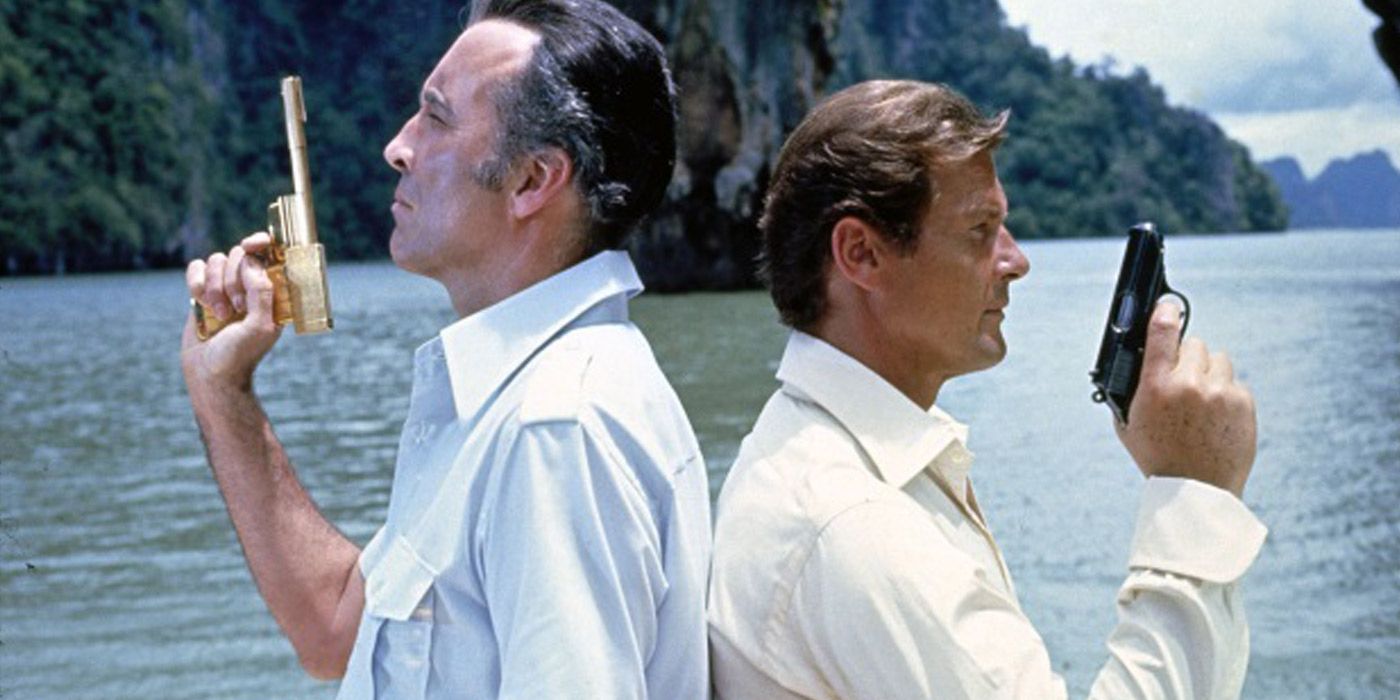
James Bond uses a Walther PPK as his weapon of choice, but he used to be armed with a Baretta 418 in the novels; why did he make the switch? MI6 agent James Bond, 007, is one of the most legendary characters in all of fiction. Practically every facet of his character has become iconic, from his Aston Martin cars to his Omega watches and his Walther PPK, a compact pistol originally designed for use in undercover operations.
From the very beginning of his cinematic tenure, 007 has been armed with the PPK. The weapon was first delivered to him in an early scene of Dr. No, the first film in the series. Ever since, it has been Bond's trusty sidearm for nearly all of the character's on-screen adventures, save for a period in the late Brosnan/early Craig era where he switched to the Walther P99.
In the first several novels by Ian Fleming, Bond used a Baretta 418, a small gun chambered for .25 caliber bullets. This was the same sidearm Fleming himself had been issued during his time as a World War II intelligence officer. He felt it would fit a character like James Bond, since it was easy to conceal, and in a thin chamois leather holster, it would be nigh-unnoticeable to potential enemies and – more importantly – it wouldn't make any unwanted creases in his suit. However, one man believed Bond should carry a stronger weapon, and his interactions with Ian Fleming led to 007 being forced to abandon the Baretta and pick up his iconic PPK.
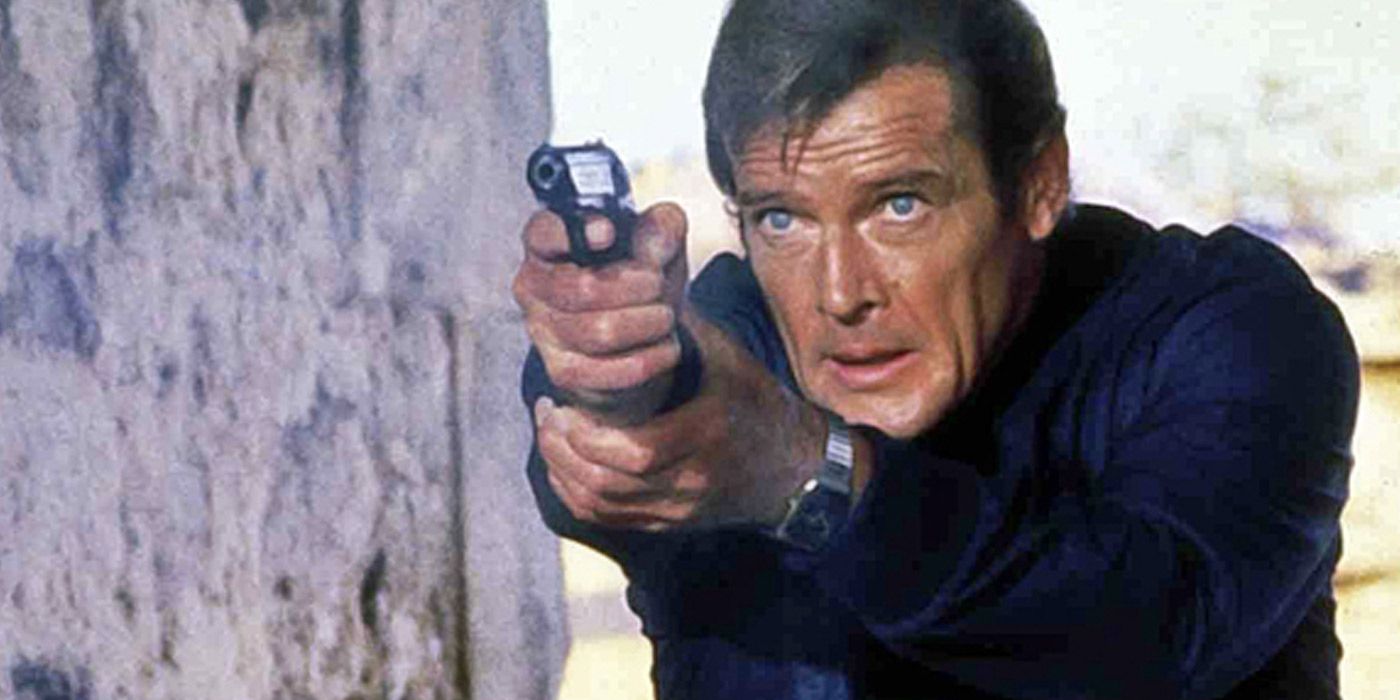
The literary version of 007 had been well-served by his .25 caliber pistol, but Geoffrey Boothroyd thought the agent should have better protection than the Beretta could provide. In a letter to Ian Fleming, Boothroyd described the Beretta 418 as "a lady's gun", and thought 007 needed something better. Rather than dismissing the letter out of hand, Fleming asked Boothroyd for advice on what weapon 007 should carry. Thus, in the novel Dr. No, Bond is forced by M to relinquish his Baretta in favor of a Walther PPK and a revolver, but the latter weapon would be quickly phased out in favor of the former in subsequent stories. Best of all, the character who gives Bond his new gun, the man who would later evolve into the series mainstay, is referred to as "Major Boothroyd," a nod to the man who inspired the change.
In contrast to the .25 caliber rounds of the Baretta, the Walther PPK used by 007 is chambered for .32 ACP rounds, a far more popular bullet easily available all over the world, which is useful for an agent like Bond. Additionally, the rounds have significantly more stopping power than the old Baretta, thus offering 007 a greater degree of protection in a heated firefight. Finally, the weapon is smaller than most handguns, sparing Bond's tuxedos from those pesky creases.
James Bond's Walther PPK would serve as his trusty sidearm for 35 years, appearing in nearly every single 007 film until Octopussy, where it was briefly replaced by the newer Walther P5, though most viewers would be hard-pressed to notice the switch, since the guns look similar to the untrained eye. In 1997's Tomorrow Never Dies, Bond switches out his PPK for a P99, a bulkier weapon with a higher magazine capacity chambered for either 9mm or .40 S&W bullets. He uses it in the climactic assault of the film, a situation where discretion and style are less important than raw stopping power. Oddly, the P99, despite its conspicuous frame compared to the PPK, remained Pierce Brosnan's main sidearm for the duration of his tenure as 007, as well as Daniel Craig's first outing as the character, Casino Royale.
In Quantum of Solace, the character returned to using the classic PPK, minor variations of which would see use in subsequent films. James Bond will return in No Time to Die, the 25th cinematic 007 adventure. He'll be armed with a PPK in the new film, and it's reasonable to suggest he'll continue using the iconic firearm for as long as the film series lasts.
from ScreenRant - Feed https://ift.tt/2xmtMKd


0 Comments