
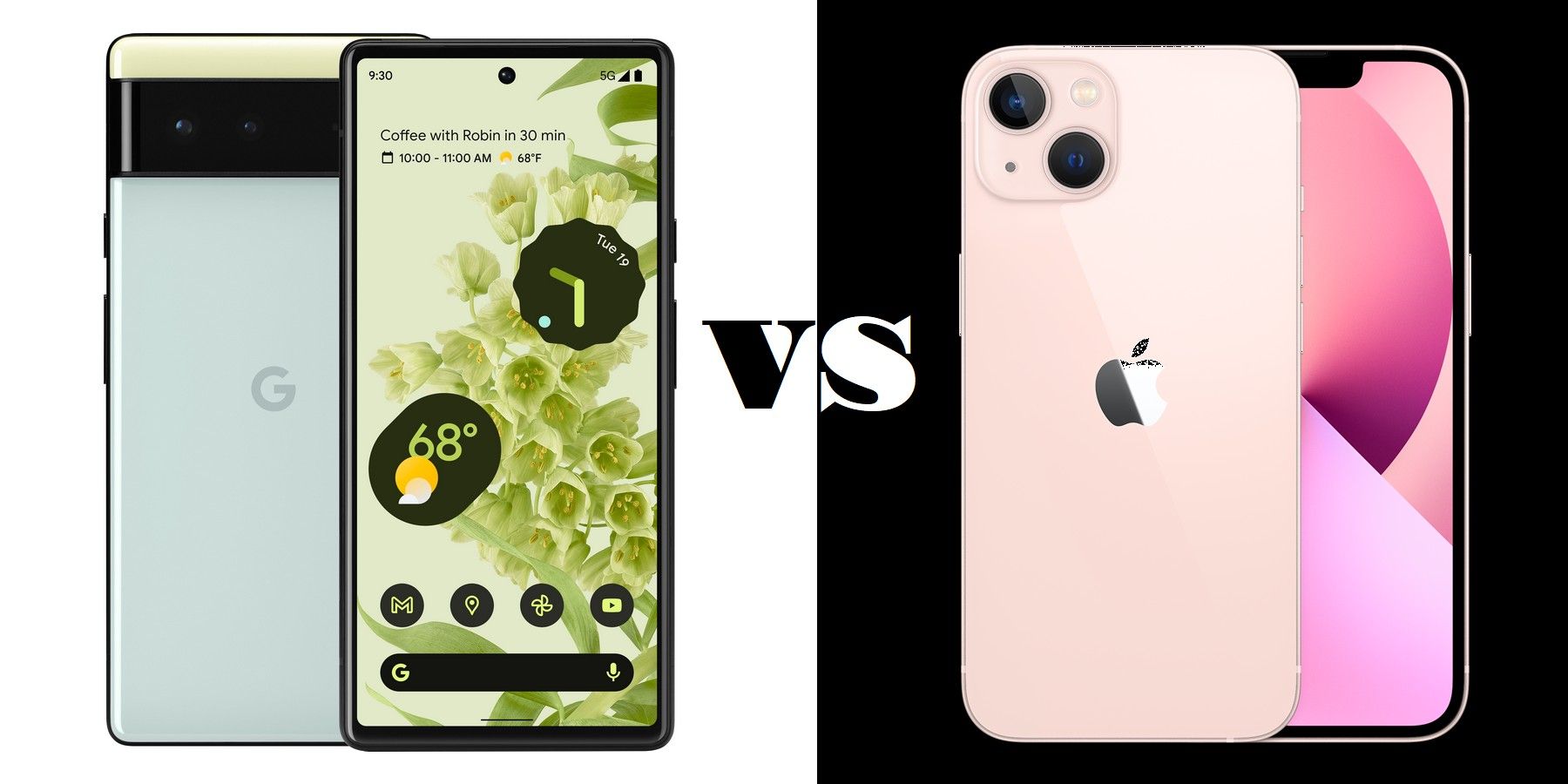
The Google Pixel 6 starts at $599, undercutting the iPhone 13 and its mini sibling by a healthy margin. Before deciding which phone offers better value, it is worth noting that both devices follow the same fundamental playbook for selling a phone. With the Tensor chip, Google has finally consolidated its control over the Pixel line to a similar level as Apple, making it easier to offer a more cohesive hardware and software experience.
The approach appears to have paid off, at least according to Google’s claims, as the Pixel 6 comes with a handful of capabilities that the company explained were previously impossible with chips from partners such as Qualcomm. Another advantage of this deeper control over hardware is that the software support tenure has also gone up to an impressive five years. This all leads to the question of whether imitating Apple's formula makes the Pixel 6 a better 'under $800 phone' than the iPhone 13.
For those torn between the two, aesthetics is likely to play a big role here. The Pixel 6 definitely stands out and looks unlike any other phone currently available, even though the giant camera bump is a divisive element. The iPhone 13 offers a premium build, but the design is stale at this point. Both phones are IP68-certified, come in a choice of bright colors, and use fairly strong materials - Gorilla Glass Victus and Ceramic Shield, respectively - for protection. When it comes to the internals, things get a bit more confusing. Google's Tensor chip hasn’t reliably been benchmarked to assess its performance, and especially against Apple’s powerful A15 Bionic processor. However, the presence of two Cortex-X1 processors on the Tensor chip is a clear sign this sits in the same performance class as the Qualcomm and Exynos flagships of 2021. The Pixel 6 is available in two storage configurations (128GB and 256GB), while the iPhone 13 is offered in three (128GB. 256GB, and 512GB). For what it's worth, neither phone comes with a charging brick in the retail package, and iOS 15 handles things on the iPhone software side while Pixel 6 boots Android 12 out of the box.
Things get interesting in the camera department. The Pixel 6 packs an optically stabilized 50-megapixel main snapper that does 4-in-1 pixel binning to deliver 12.5-megapixel shots by default. It sits alongside a 12-megapixel ultra-wide with a 114-degree field of view. The iPhone 13 relies on a pair of 12-megapixel sensors serving as the main camera and wide-angle shooter (with a slightly higher 120-degree field of view). Google baked in some cool features, such as Face Unblur, Magic Eraser, and Motion Mode, but things are rather moderate in the video capture department. For example, there’s nothing too fancy like 8K capture, super slo-mo videos, and so on. In contrast, the iPhone 13 leans heavily on video with upgrades like Dolby Vision HDR video capture at 4K 60 fps, a dedicated Cinematic mode for intelligent depth detection in 1080p videos, and Night mode time-lapse.
Both brands have a solid reputation in the camera department, so it would be up to the buyer to decide which they prefer — the still photography excellence of the Pixel 6 or the video chops of iPhone 13. However, the front camera is where the iPhone 13’s 12-megapixel sensor crushes the Pixel 6’s 8-megapixel snapper. The Pixel 6 tries to fill that gulf with some impressive AI and ML-driven features elsewhere, including Wait Times, Direct My Call, improved call screening with Caller ID, Live Translate across messaging apps, and a real-time transcribe mode that looks extremely promising so far.
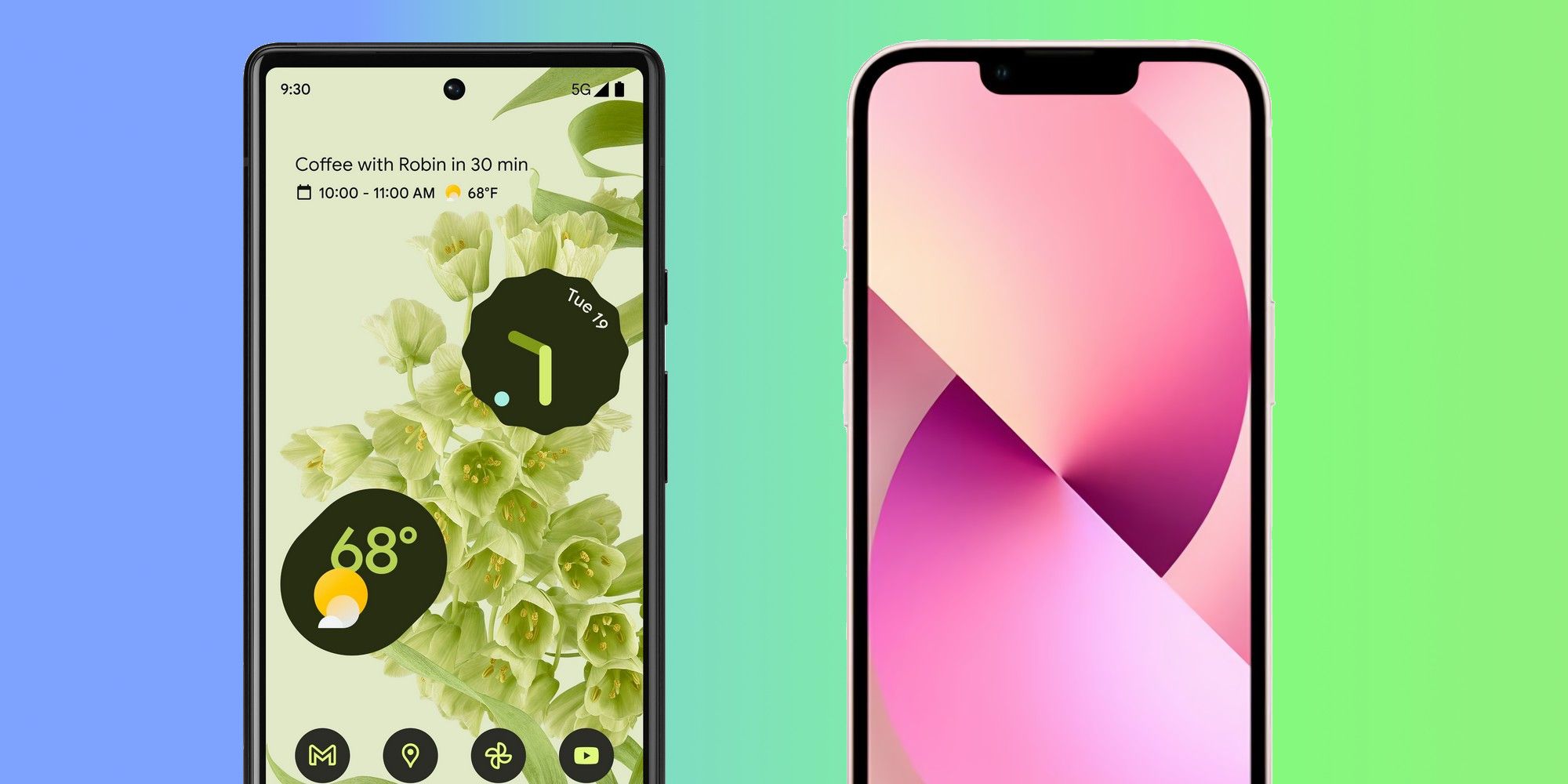
Display is one area where the Pixel 6 gains an edge over the iPhone 13. Google has armed the Pixel 6 with a 6.4-inch FHD+ OLED display with a centrally aligned hole-punch cutout for the front camera. There’s an in-display fingerprint sensor beneath the panel and the refresh rate maxes out at 90Hz. The iPhone 13 offers a 6.1-inch OLED display with a regular 60Hz refresh rate, but a slightly higher pixel density of 460 PPI compared to the Pixel 6’s 411 PPI. Both panels are HDR-certified, but the contrast ratio of the iPhone 13’s OLED panel is double that of the Pixel 6’s screen at 2,000,000:1. In other words, it can theoretically produce more vivid scenes while consuming content. In terms of battery life, the Pixel 6’s 4,614 mAh capacity battery is touted to last up to 24 hours and supports 30W wired charging. Wireless charging output tops at 21W, and there is support for reverse wireless charging as well. The iPhone 13 is said to last up to 19 hours on a single charge. Wired charging maxes out at 20W, while the MagSafe charger delivers a peak charging of 15W. Both phones are also rated to charge from 0 to 50-percent in just 30 minutes.
As far as delivering a flagship-level smartphone experience goes, the Pixel 6 appears to be the better value as it undercuts the iPhone 13 by a healthy $200 margin. Both phones have strengths and weaknesses, but they tend to follow the same trajectory when it comes to offering long-term software support. For those still torn between the two, the iPhone 13 promises a secure software experience with iOS 15 and some impressive video capture chops, while the Pixel 6 promises great still photography and a smooth Android experience that's packed with advanced Google Assistant features.
from ScreenRant - Feed https://ift.tt/3E2UXqa


0 Comments